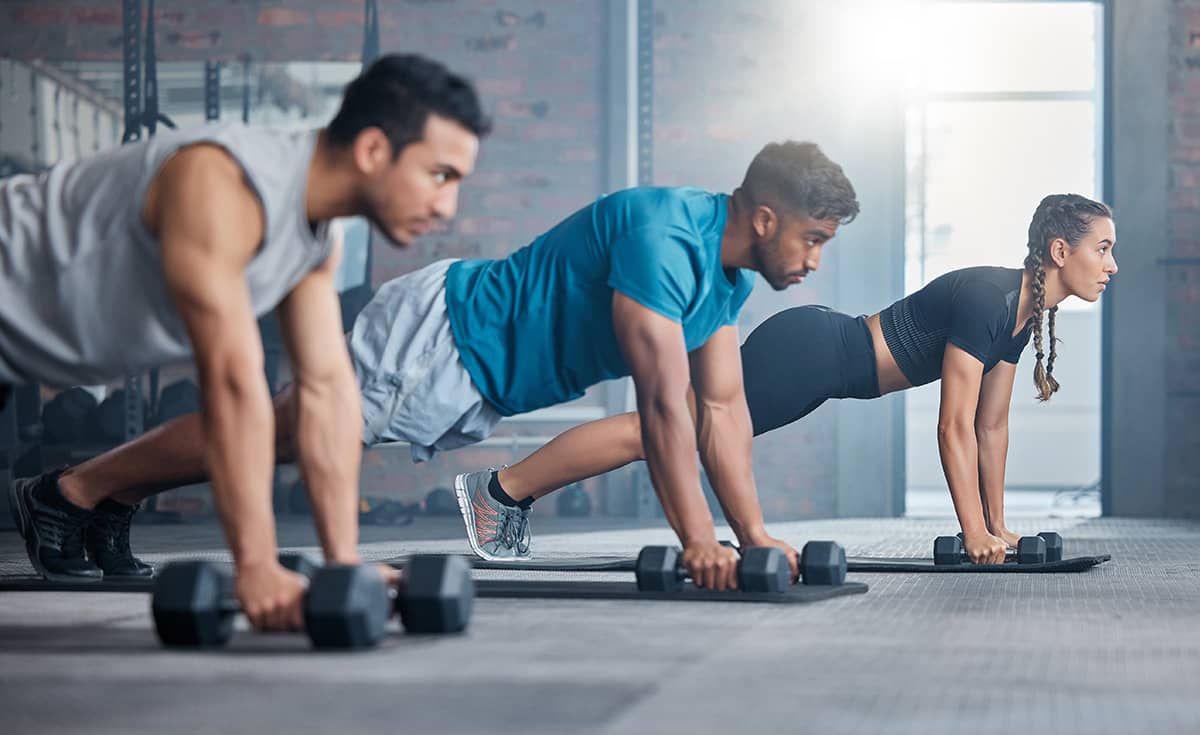
Walking into a gym for the first time can feel overwhelming. Rows of cardio machines, unfamiliar weight equipment, racks of dumbbells, and experienced gym-goers moving confidently between exercises can leave beginners wondering where to start.
Which machine should you use first? How do you adjust the seat? How much weight should you lift? And how can you tell whether you’re performing an exercise correctly?
These are normal questions, and learning the answers is an important part of building a successful fitness routine.
Understanding how to use gym machines doesn’t require years of experience or advanced knowledge of exercise science. With a few fundamental principles, appropriate starting weights, and some basic instruction, you can begin exercising safely and confidently.
At Odyssey Fitness Center in Wilkes-Barre, Pennsylvania, our facility offers an extensive selection of cardiovascular machines, resistance equipment, free weights, and functional training areas. We also offer personalized guidance for members who want help learning proper technique.
This beginner-friendly gym equipment guide explains the most common categories of gym equipment, how to use them effectively, and the safety habits that will help you get more from every workout.
Table of Contents
- Understanding the Main Types of Gym Equipment
- How to Use Cardio Machines Safely
- Beginner’s Guide to Weight Machines
- How to Use Free Weights
- Essential Gym Equipment Safety Rules
- A Simple Full-Body Beginner Workout
- Common Gym Equipment Mistakes
- Getting Started at Odyssey Fitness Center
- Frequently Asked Questions
Understanding the Main Types of Gym Equipment
Most fitness centers organize their equipment into three major categories: cardiovascular machines, resistance training machines, and free weights.
Each serves a different purpose.
| Equipment Category | Examples | Primary Benefits |
| Cardio machines | Treadmills, bikes, ellipticals, rowers | Cardiovascular fitness and endurance |
| Weight machines | Chest press, leg press, seated row | Guided resistance training |
| Free weights | Dumbbells, barbells, kettlebells | Strength, coordination, and movement control |
| Functional equipment | Cable stations, benches, medicine balls | Strength and everyday movement patterns |
Beginners don’t need to master every category immediately.
In fact, learning a handful of exercises well is usually more productive than attempting dozens of unfamiliar movements.
Start with equipment that feels manageable, then gradually expand your routine.
How to Use Cardio Machines Safely
Cardio equipment is often the easiest place to begin because many machines allow you to adjust speed or resistance gradually.
1. Treadmills
Treadmills are popular for walking, jogging, and running.
How to get started:
- Stand on the side rails before starting the belt.
- Attach the safety clip if the treadmill provides one.
- Begin at a slow walking speed.
- Step onto the moving belt carefully.
- Increase speed or incline gradually.
- Slow the belt before finishing.
Maintain a comfortable upright posture and look forward rather than constantly looking down at the display.
Avoid holding the handrails continuously unless you need them for balance or are following specific medical guidance. Relying heavily on the rails can change your natural walking mechanics.
Beginner tip: Start with 10–15 minutes of comfortable walking and gradually increase the duration as your endurance improves.
2. Stationary Bikes
Stationary bikes provide cardiovascular exercise with relatively low joint impact.
Two common options are upright and recumbent bikes.
An upright bike positions you similarly to a traditional bicycle, while a recumbent bike provides a supported seat with a backrest.
Proper setup:
- Adjust the seat so your knee remains slightly bent at the farthest pedal position.
- Keep your feet securely positioned on the pedals.
- Start with light resistance.
- Pedal smoothly without excessive rocking or bouncing.
- Increase resistance gradually.
If your knees or hips feel uncomfortable, check the seat position before increasing intensity.
3. Elliptical Machines
Ellipticals offer a smooth, continuous movement that combines elements of walking, climbing, and running.
Many models include moving handles that engage the upper body.
To use an elliptical safely, step onto the pedals while the machine is stationary, establish your balance, and begin moving at a comfortable pace.
Keep your torso upright, avoid excessive leaning, and maintain controlled movement.
Some machines allow you to change resistance and incline independently.
Start with a manageable setting rather than immediately selecting a challenging program.
4. Rowing Machines
Rowers can provide an effective full-body cardiovascular workout, but proper technique matters.
A rowing stroke generally follows this sequence:
Drive: Push through your legs, then lean back slightly from the hips and finish by drawing the handle toward your lower ribs.
Recovery: Extend your arms, hinge forward from the hips, and then bend your knees to return to the starting position.
Avoid rounding your back, pulling primarily with your arms, or rushing through the movement.
Beginners should focus on smooth, coordinated strokes before increasing resistance or speed.
Odyssey’s cardio room includes a wide selection of equipment, including treadmills, bikes, ellipticals, stair-climbing options, and Concept2 rowers, allowing members to find activities suited to their goals.
Beginner’s Guide to Weight Machines
Weight machines are often a practical starting point for resistance training because they guide movement along a relatively fixed path.
They can make it easier to learn which muscles an exercise targets while reducing some of the balance demands associated with free weights.
However, machines still require correct setup and technique.
How to Adjust a Weight Machine
Before beginning any exercise:
- Read the instructions and movement diagram.
- Adjust the seat or backrest to fit your body.
- Align your joints with the machine’s intended movement path.
- Select a light starting resistance.
- Perform one or two controlled practice repetitions.
- Stop and ask for assistance if the movement feels awkward or painful.
Different machine models have different adjustment systems. Never assume that a seat position suitable for one machine will work on another.
Chest Press Machine
The chest press primarily trains the chest, shoulders, and triceps.
Form cues:
- Adjust the seat so the handles are approximately at mid-chest height.
- Keep your back supported against the pad.
- Press forward smoothly.
- Avoid aggressively locking your elbows.
- Return the handles under control.
If you need to arch excessively or lift your shoulders to reach the handles, the setup may need adjustment.
Lat Pulldown Machine
The lat pulldown primarily trains muscles in the upper back, including the latissimus dorsi.
Form cues:
- Adjust the thigh pad so your legs are secure.
- Sit tall with your feet supported.
- Pull the bar toward your upper chest.
- Keep your shoulders controlled rather than shrugging.
- Return the bar slowly.
Avoid pulling the bar behind your neck or swinging your torso to move the weight.
Leg Press Machine
The leg press trains the quadriceps, glutes, and other lower-body muscles.
Form cues:
- Position your feet approximately hip- to shoulder-width apart.
- Keep your back and hips supported.
- Lower the weight only as far as you can while maintaining a stable pelvis.
- Press through your feet without forcefully snapping your knees straight.
Different leg press designs have different safety mechanisms. Learn how to engage and disengage them before using the machine.
Seated Row Machine
The seated row strengthens the upper back and helps develop pulling strength.
Keep your torso stable, draw the handles toward your body, and allow your shoulder blades to move naturally.
Avoid leaning backward dramatically to lift a weight that’s too heavy.
Leg Curl Machine
Leg curls primarily target the hamstrings.
Adjust the machine so its pivot aligns appropriately with your knee joint and the roller pad sits in the intended position.
Move slowly and avoid lifting your hips or forcing the range of motion.
Beginner Weight Machine Tips That Make a Difference
When you’re first learning resistance training, technique should come before weight selection.
Follow these principles:
- Choose a manageable load. You should be able to perform every repetition with control.
- Move through a comfortable range. Don’t force your joints into painful positions.
- Control both directions. Avoid allowing the weight stack to slam down.
- Breathe naturally. Exhale during the demanding portion of a repetition and inhale during the return.
- Use consistent technique. If your form changes significantly as you fatigue, end the set or reduce the load.
- Keep a workout record. Note your settings, weights, repetitions, and how the exercise felt.
A useful starting range for many beginners is one or two sets of approximately 8–12 repetitions per exercise, with enough rest to maintain good technique.
The appropriate amount varies depending on your health, experience, and goals.
How to Use Free Weights Safely
Free weights include dumbbells, barbells, and kettlebells.
Unlike many weight machines, free-weight exercises require you to control the direction of movement yourself.
This can help develop strength, coordination, and stability, but it also means technique deserves careful attention.
Dumbbells
Dumbbells are versatile and useful for beginners.
Common exercises include:
- Dumbbell chest presses
- Biceps curls
- Shoulder presses
- Goblet squats
- One-arm rows
- Farmer’s carries
Begin with weights you can control comfortably.
For example, a dumbbell curl should involve bending the elbow without swinging your torso or lifting your shoulders.
Barbells
Barbells are commonly used for exercises such as squats, deadlifts, bench presses, and rows.
These movements can be highly effective, but beginners should learn proper positioning and technique before adding substantial resistance.
For bench presses or heavy squats, use appropriate safety supports and a qualified spotter when needed.
Never attempt a maximal lift simply to see how much weight you can move.
Kettlebells
Kettlebells are useful for carries, deadlifts, squats, and other strength exercises.
More technical movements, such as kettlebell swings, require proper hip-hinge mechanics and are best learned with instruction.
A simple kettlebell deadlift is often a better starting point than a high-repetition swing workout.
Gym Equipment Safety Checklist
Before using any unfamiliar equipment, review this checklist.
| Safety Check | What to Do |
| Equipment condition | Check for visible damage or loose components |
| Machine settings | Adjust the seat, pads, and range of motion |
| Starting weight | Choose resistance you can control |
| Exercise technique | Review instructions or ask a trainer |
| Breathing | Avoid unnecessary breath-holding |
| Training space | Keep the area clear of bags and loose weights |
| After your set | Return weights and clean shared surfaces |
Stop exercising if you experience sharp pain, dizziness, chest discomfort, or unusual shortness of breath. Seek medical attention when symptoms warrant it.
People with significant medical conditions, recent injuries, or post-surgical restrictions should seek individualized guidance before beginning a new program.
A Simple Full-Body Gym Workout for Beginners
You don’t need an elaborate program to begin building strength.
The following workout combines cardiovascular exercise and basic resistance movements.
| Exercise | Sets | Repetitions or Duration |
| Treadmill or stationary bike | 1 | 5–10 minutes |
| Leg press | 2 | 8–12 repetitions |
| Chest press | 2 | 8–12 repetitions |
| Seated row | 2 | 8–12 repetitions |
| Lat pulldown | 2 | 8–12 repetitions |
| Bodyweight sit-to-stand | 2 | 8–10 repetitions |
| Comfortable walking cooldown | 1 | 5 minutes |
Rest approximately 60–120 seconds between sets, or longer if needed.
This routine can be performed two nonconsecutive days per week to start, with adjustments based on your ability and recovery.
Choose light weights during your first sessions. Your initial objective is to learn the movements and finish feeling capable of returning for another workout.
As you gain experience, you can gradually increase resistance, repetitions, or total training volume.
Common Gym Equipment Mistakes Beginners Make
Using Too Much Weight
Trying to lift heavy weights before developing proper technique is a common mistake.
Start lighter than you think necessary and increase gradually.
Skipping the Warm-Up
A short warm-up helps you transition from rest to exercise.
Five to ten minutes of light cardiovascular activity followed by movement-specific warm-up sets is a practical approach.
Copying Other People’s Workouts
An exercise that works well for an experienced athlete may not be appropriate for someone just starting.
Your routine should reflect your own goals and current abilities.
Ignoring Machine Adjustments
Poor seat positioning can make an otherwise straightforward exercise uncomfortable or inefficient.
Take time to set up each machine correctly.
Training Without a Plan
Walking randomly between equipment can make progress difficult to measure.
A simple, repeatable program is usually more effective.
Why Odyssey Fitness Center Is a Great Place to Learn
Learning how to use gym machines is easier when you have access to a variety of equipment and knowledgeable guidance.
Odyssey Fitness Center offers more than 70,000 square feet of fitness space, including a dedicated cardio room, extensive strength training areas, and a 6,000-square-foot Sports Performance Area.
Our strength equipment includes Life Fitness Insignia machines, FreeMotion equipment, Hammer Strength machines, dumbbells, benches, barbells, and plates. <Cite refs={[“turn303198search6″,”turn303198search11”]}/>
For beginners, this variety provides opportunities to start with guided resistance machines and gradually explore free weights as confidence develops.
Most importantly, you don’t have to figure everything out on your own.
Odyssey offers a free First Step Session for new members, providing an opportunity to meet with a trainer and begin building a fitness plan. <Cite ref=”turn303198search3″/>
If you want additional one-on-one guidance, our personal training services can help you learn equipment setup, exercise technique, and safe progression. <Cite ref=”turn303198search0″/>
Whether you live in Wilkes-Barre, Kingston, Plains, Pittston, Dallas, Mountain Top, or another nearby Northeastern Pennsylvania community, having a supportive fitness environment can make your first gym experiences more comfortable.
Start with Confidence, Not Perfection
Nobody walks into a gym knowing how to use every piece of equipment.
Confidence develops through practice, asking questions, and gradually learning what works for your body.
Begin with a few straightforward exercises, use manageable weights, and focus on consistency rather than trying to master the entire gym in one visit.
Over time, movements that once seemed intimidating can become familiar parts of your routine.
If you’re searching for the best gym in Wilkes-Barre for beginners, look for more than an impressive selection of equipment. Look for a facility where you can learn, ask questions, and receive guidance when you need it.
Ready to get started? Visit Odyssey Fitness Center’s membership page to learn about joining, or explore our personal training programs for individualized instruction.
You can also visit Odyssey Fitness Center at 401 Coal Street, Wilkes-Barre, PA 18702, or call 570-829-2661.
Frequently Asked Questions
What gym machines should beginners use first?
Beginners often benefit from starting with straightforward cardiovascular equipment and selectorized resistance machines. Treadmills, stationary bikes, and ellipticals allow users to adjust intensity gradually, while machines such as the chest press, seated row, leg press, and lat pulldown provide guided resistance movements. Start with equipment that feels comfortable and manageable rather than attempting every machine during your first visit. Learn how to adjust seats, pads, and resistance settings before exercising. A trainer can help you choose machines appropriate for your body, goals, and experience level. As your confidence grows, you can incorporate additional equipment and more challenging exercises.
Are weight machines safer than free weights for beginners?
Weight machines can be easier for beginners to learn because they guide movement along a relatively fixed path and generally require less balance and coordination than free weights. However, that doesn’t automatically make them safer in every situation. Poor machine setup, excessive resistance, or inappropriate range of motion can still cause problems. Free weights are also suitable for beginners when exercises are selected carefully and performed with proper technique. Both types of equipment can be effective for building strength. The best choice depends on your goals, physical abilities, comfort level, and access to instruction. Many successful training programs incorporate both.
How much weight should I lift when starting at the gym?
Start with a weight that allows you to perform approximately 8–12 controlled repetitions while maintaining proper technique. The final repetitions may feel challenging, but you shouldn’t need to swing, jerk, or significantly change your posture to complete them. For unfamiliar exercises, practice with very light resistance first. The appropriate weight will vary between exercises and individuals, so don’t compare your starting numbers with someone else’s. Once you can complete your planned sets comfortably with consistent form, increase resistance in small increments. Gradual progression is more sustainable than trying to lift as much as possible during your first workouts.
How many gym machines should a beginner use per workout?
Most beginners can build an effective workout using approximately four to six exercises that train major muscle groups. For example, a simple routine might include a leg press, chest press, seated row, lat pulldown, and an additional lower-body or core exercise. You don’t need to use every available machine to achieve results. Start with one or two sets per exercise and focus on technique. As your fitness improves, you can gradually increase the number of sets or introduce additional movements. The goal is to create a manageable routine you can repeat consistently, not to exhaust yourself during every gym visit.
Should I hire a personal trainer to learn how to use gym equipment?
You don’t necessarily need a personal trainer to begin exercising, but professional guidance can make the learning process easier and more efficient. A trainer can explain how to adjust machines, demonstrate proper technique, recommend appropriate starting weights, and help create a program based on your goals. This can be particularly valuable if you’re unfamiliar with resistance training or have specific movement limitations. At Odyssey Fitness Center, new members can take advantage of a free First Step Session to help begin their fitness journey. Additional personal training is available for those who want individualized coaching and ongoing support.