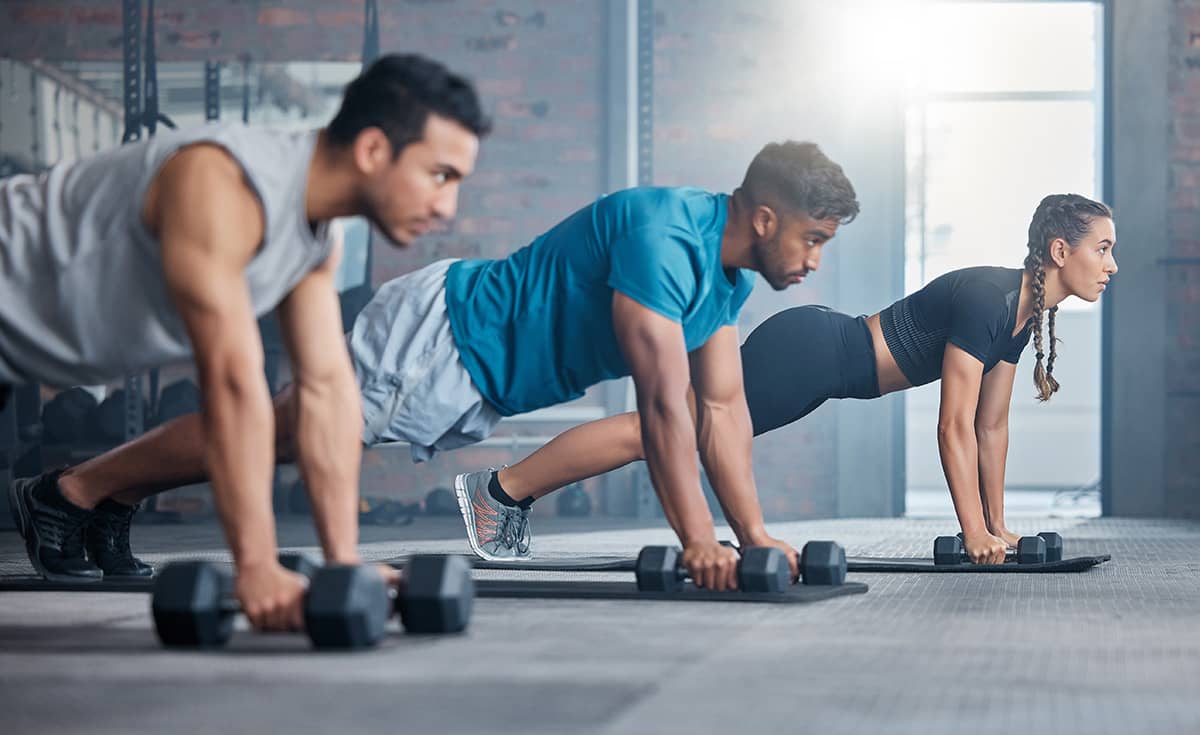
When most people think about getting stronger, they picture lifting heavier weights or building bigger muscles. While strength training is an important part of a healthy lifestyle, there’s another style of exercise that’s becoming increasingly popular because of its real-world benefits: functional fitness.
Functional fitness focuses on movements that mimic the activities you perform every day. Whether you’re carrying groceries, climbing stairs, lifting your children, reaching overhead, or getting up from the floor, functional training helps make those everyday tasks easier and safer.
As a fitness professional, I often tell clients that the goal isn’t just to become stronger in the gym—it’s to become stronger in life. That’s exactly what functional training exercises are designed to accomplish.
At Odyssey Fitness Center, members throughout Wilkes-Barre, Kingston, Plains, Pittston, Dallas, Mountain Top, and all over NEPA have access to a dedicated Sports Performance Area, extensive free weights, functional training equipment, and expert coaching that make it easy to build everyday strength training in Wilkes Barre into any fitness program.
Whether you’re a beginner, an active adult, or an athlete looking to improve performance, functional fitness can help you move better, feel stronger, and reduce your risk of injury.
Table of Contents
- What Is Functional Fitness?
- Why Functional Training Is Different
- The Benefits of Functional Fitness
- The Best Functional Training Exercises
- Who Should Do Functional Training?
- Functional Fitness vs. Traditional Strength Training
- Building a Functional Workout
- Why Odyssey Fitness Center Is Ideal for Functional Training
- Frequently Asked Questions
What Is Functional Fitness?
Functional fitness is a style of exercise that trains your body to perform everyday movements more efficiently.
Rather than isolating individual muscles, functional exercises involve multiple joints and muscle groups working together.
Think about everyday activities like:
- Carrying heavy grocery bags
- Picking up a child
- Loading luggage into your car
- Climbing stairs
- Shoveling snow
- Getting up from a chair
- Reaching into a high cabinet
These activities require balance, coordination, mobility, stability, and strength—not just one muscle working independently.
Functional training develops these movement patterns so your body becomes stronger where it matters most.
Why Functional Training Is Different
Traditional strength training often isolates specific muscles using machines.
For example:
- Leg extensions target the quadriceps.
- Bicep curls isolate the biceps.
- Leg curls focus primarily on the hamstrings.
There’s absolutely value in these exercises.
Functional fitness, however, emphasizes movement patterns rather than individual muscles.
Instead of asking,
“Which muscle am I working?”
Functional training asks,
“What movement am I improving?”
This approach develops coordination between muscles, making your body more efficient during everyday activities.
The Benefits of Functional Fitness
There are countless reasons why functional training has become a staple in modern fitness programs.
Improved Everyday Strength
One of the greatest advantages of everyday strength training in Wilkes Barre is exactly what the name suggests.
Daily tasks become easier.
You’ll notice improvements when:
- Carrying laundry baskets
- Moving furniture
- Gardening
- Walking upstairs
- Lifting children or grandchildren
Real-world strength often matters more than the amount of weight you can lift in the gym.
Better Balance and Stability
Many functional exercises challenge your body’s stabilizing muscles.
Improving balance can:
- Reduce fall risk
- Improve athletic performance
- Increase confidence during movement
This is especially important as we age.
Increased Mobility
Mobility refers to your ability to move freely through a full range of motion.
Functional training incorporates movements that improve flexibility while strengthening muscles throughout those ranges.
Better mobility often means:
- Less stiffness
- Easier movement
- Improved posture
- Reduced aches and pains
Lower Risk of Injury
By strengthening muscles that work together during daily activities, functional fitness helps prepare your body for real-life movement.
This may reduce the likelihood of strains caused by awkward lifting or sudden movements.
The Best Functional Training Exercises
Here are some of the most effective functional training exercises you can include in your workouts.
Squats
Squats mimic sitting down and standing up.
Benefits include:
- Stronger legs
- Better hip mobility
- Improved balance
Lunges
Lunges improve single-leg strength while enhancing coordination and stability.
They also help improve walking and stair climbing.
Farmer’s Carries
Simply carrying heavy dumbbells while walking develops:
- Grip strength
- Core stability
- Posture
- Everyday carrying strength
This exercise closely resembles carrying groceries or luggage.
Deadlifts
When performed properly, deadlifts teach safe lifting mechanics.
They strengthen:
- Glutes
- Hamstrings
- Core
- Lower back
Learning proper lifting technique is one of the best ways to protect your back during everyday activities.
Push-Ups
Push-ups strengthen the:
- Chest
- Shoulders
- Triceps
- Core
They also teach your body to stabilize during upper-body movement.
Planks
Core stability is essential for nearly every movement.
Planks improve posture while strengthening the muscles that support your spine.
Functional Fitness vs. Traditional Strength Training
Many people assume they must choose one style over the other.
In reality, they complement one another extremely well.
| Functional Fitness | Traditional Strength Training |
| Trains movement patterns | Trains individual muscles |
| Improves balance and coordination | Builds muscle size and strength |
| Mimics daily activities | Focuses on isolated movements |
| Often uses multiple muscle groups | May use machines or free weights |
| Excellent for all ages | Excellent for building strength |
The best workout programs include elements of both.
Who Should Do Functional Fitness?
The short answer?
Almost everyone.
Functional fitness is beneficial for:
Beginners
Learning fundamental movement patterns creates a strong foundation for future training.
Older Adults
Maintaining mobility and balance becomes increasingly important with age.
Athletes
Functional training improves coordination, agility, and overall performance.
Busy Professionals
Improved posture, mobility, and strength make daily life easier and can reduce discomfort associated with sitting for long periods.
Sample Functional Fitness Workout
Here’s an example of a beginner-friendly functional workout.
Warm-Up (5 Minutes)
- Brisk walk
- Dynamic stretching
- Bodyweight squats
Circuit (20 Minutes)
Complete three rounds:
- Goblet Squats – 10 reps
- Farmer’s Carry – 30 seconds
- Walking Lunges – 10 each leg
- Push-Ups – 10 reps
- Plank – 30 seconds
Cool Down (5 Minutes)
- Stretch hips
- Stretch hamstrings
- Shoulder mobility exercises
This routine develops strength, coordination, balance, and endurance simultaneously.
Why Odyssey Fitness Center Is Perfect for Functional Training
Functional fitness requires space, equipment, and variety.
Odyssey Fitness Center offers all three.
Members have access to:
- Dedicated Sports Performance Area
- Functional training equipment
- Free weights
- Kettlebells
- Resistance bands
- Sleds
- Open turf space
- Strength machines
For those looking for personalized instruction, working with a personal trainer in Wilkes-Barre can help you learn proper movement patterns while developing a customized program based on your goals.
👉 Learn more about our Personal Training services in Wilkes Barre and let one of our certified trainers design a functional fitness program that’s right for you.
Functional Fitness Is Training for Life
The true purpose of exercise isn’t simply looking better.
It’s living better.
Functional fitness helps you move confidently, perform everyday tasks with less effort, and maintain independence throughout every stage of life.
Whether you’re lifting a grandchild, carrying groceries, enjoying recreational sports, or simply getting through your daily routine pain-free, functional strength makes life easier.
At Odyssey Fitness Center, we believe fitness should improve every aspect of your life—not just your workouts. That’s why our functional training spaces, experienced coaches, and diverse equipment selection help make us one of the best gyms in Wilkes-Barre for members of every age and fitness level.
Frequently Asked Questions
What is functional fitness?
Functional fitness is a style of exercise that focuses on improving movements you use in everyday life. Instead of isolating individual muscles, functional training incorporates multiple joints and muscle groups working together to perform activities like lifting, carrying, reaching, bending, and climbing stairs. The goal is to improve strength, balance, coordination, mobility, and overall movement efficiency so daily tasks become easier and safer.
What are the best functional training exercises?
Some of the most effective functional training exercises include squats, lunges, deadlifts, farmer’s carries, push-ups, planks, and step-ups. These exercises strengthen multiple muscle groups simultaneously while improving stability, balance, and coordination. They closely mimic real-life movements, making them highly effective for improving everyday function as well as athletic performance.
Is functional fitness good for beginners?
Yes. Functional fitness is excellent for beginners because it teaches proper movement patterns before progressing to more advanced exercises. Learning how to squat, hinge, push, pull, and carry correctly creates a strong foundation for all future training. Most exercises can be modified based on fitness level, making functional fitness appropriate for people of all ages and abilities.
Can functional fitness help prevent injuries?
While no exercise program can completely eliminate injury risk, functional fitness helps improve mobility, balance, coordination, and overall body awareness. Strengthening the muscles that work together during everyday movements may reduce the likelihood of strains caused by lifting, twisting, or awkward movements. Proper exercise technique and gradual progression are essential for maximizing these benefits.
Should I combine functional fitness with traditional strength training?
Absolutely. Functional fitness and traditional strength training complement one another extremely well. Traditional strength training builds muscle and increases force production, while functional training improves movement quality, stability, and coordination. Combining both approaches creates a balanced fitness program that supports athletic performance, everyday activities, and long-term health.